Custom SEO Tools: When To Build Your Own
Off-the-shelf tools are generic by design. Here is when a custom-built SEO tool pays for itself — and how the build process works.
By Syed Asif · SEO Consultant · Updated October 2026
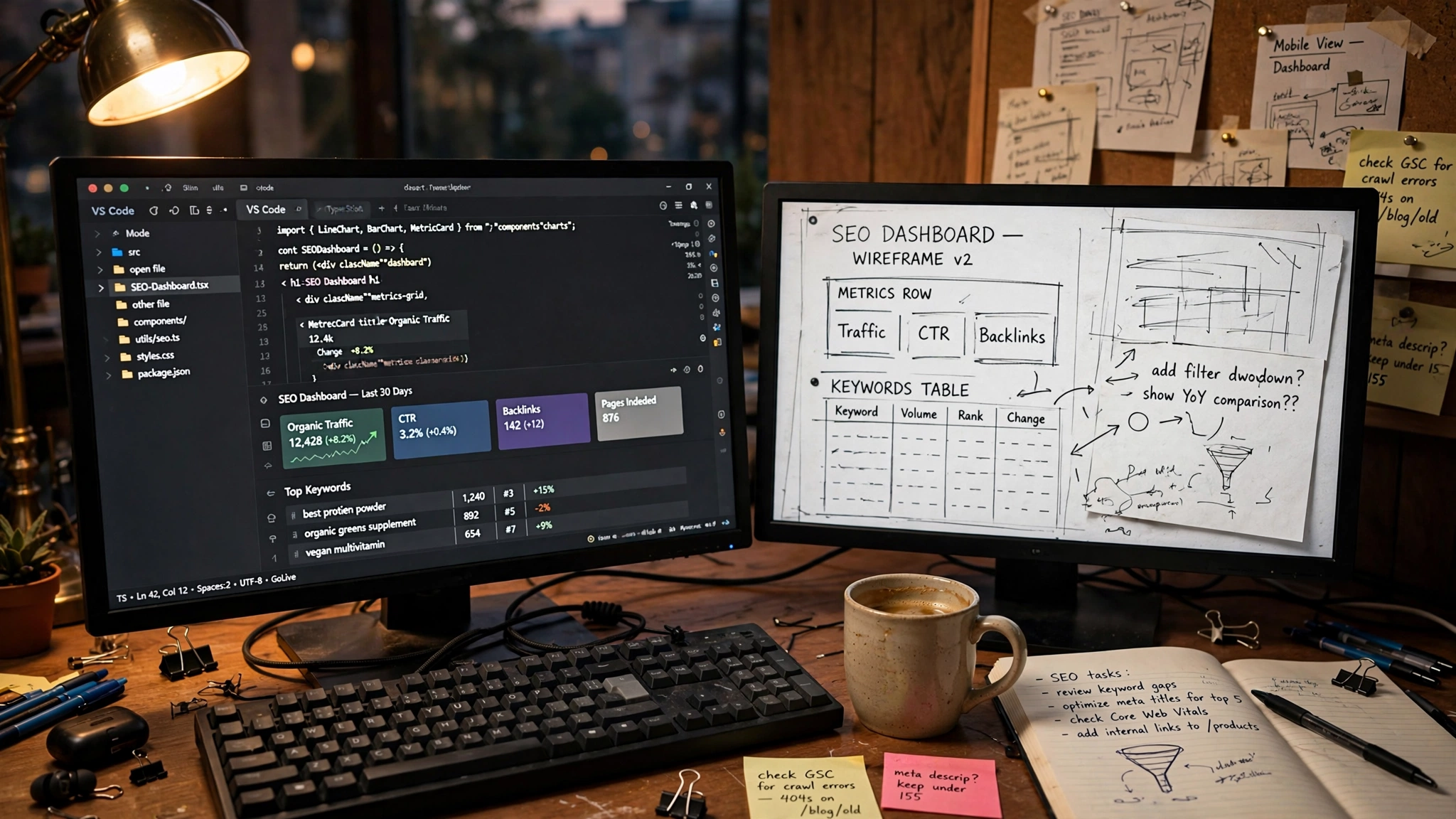
What Custom SEO Tools Actually Are
A custom SEO tool is software built for one job your business does repeatedly: checking rankings across hundreds of locations, auditing client sites in bulk, generating location pages, scoring leads, or turning raw data into client-ready reports. Instead of paying for a bloated subscription full of features you never touch, you get exactly the workflow you need.
Agencies, lead-generation businesses, and in-house teams use them to automate repetitive SEO work — and some sell access to the tool itself as a second revenue stream.
Examples That Pay For Themselves
Bulk rank trackers. Checking 500 keywords across 50 cities manually is impossible; a custom tracker does it on schedule and flags movement.
White-label audit generators. Enter a URL, get a branded PDF report in seconds — perfect for agencies selling audits at scale.
Lead scoring tools. Scan local business listings, score them by SEO weakness, and output a prioritized prospect list for outreach.
Content and page generators. Build hundreds of genuinely useful location or service pages from structured data, with human review before publishing.
Call and lead trackers. For pay-per-call businesses, custom dashboards that attribute every call to its source page and campaign.
Build Vs. Buy: The Honest Math
Off-the-shelf tools win when your need is generic — standard rank tracking or site audits. Custom wins when:
- ✓ You repeat the same multi-step workflow weekly and it eats hours.
- ✓ You need data combined from sources no single tool covers.
- ✓ The tool itself is the product you plan to sell or offer free to attract leads.
- ✓ Subscription costs for your team size exceed the one-time build cost within a year.
A custom tool is an investment, not an expense — but only if the workflow it automates is genuinely valuable. Automating a bad process just produces bad results faster.
How A Custom SEO Tool Gets Built
1. Workflow mapping. The process is documented step by step: inputs, decisions, outputs. Anything vague here becomes a bug later.
2. Data sources. Search APIs, scraping with proper rate limits, Google Search Console data, or your own databases — chosen for reliability and cost.
3. Prototype. A working minimum version that handles the core job. Tested on real data, not demos.
4. Interface. Clean dashboards your team (or customers) can use without training. If it needs a manual, it is too complex.
5. Iteration. Real usage reveals the edge cases. The best tools are refined over the first few months of production use.
The Hidden SEO Benefit
Free tools are link magnets. A genuinely useful free SEO tool on your site earns backlinks naturally — bloggers, forums, and resource pages link to tools far more readily than to service pages. Many agencies find their free tool becomes their highest-authority page. That is why I build tools as part of my SEO tool development service: they work as software and as SEO assets.
Monetizing Your Custom Tool
Many custom tools start as internal utilities and grow into revenue. The common paths:
Free tool as lead magnet. Offer a genuinely useful free version — a mini audit, a keyword tool — and gate the advanced features behind an email signup. Agencies use this to fill their pipeline with pre-qualified prospects who already trust the brand.
Freemium SaaS. If the tool solves a real recurring pain, charge monthly for it. Even modest pricing works when the audience is targeted — 100 users at a fair price beats chasing enterprise deals.
White-label for clients. Agencies resell tool access to clients as a value-add or a line item, turning a cost center into a profit center.
The rule: monetize only after real users love the free core. A tool nobody uses for free will not sell either.
Frequently Asked Questions
Related Reading
Go deeper with my SEO tool development service, or continue with SEO Friendly Web Design and White Hat Link Building.
Want SEO That Actually Brings Customers?
Tell me about your business and I will map out exactly what your SEO should look like. Pricing is a simple $— placeholder until we talk — no surprises, no hidden fees.
Let's Make Google Work For You
Tell Me About Your Goals — I'll Tell You Honestly What SEO Can Do For Them.